
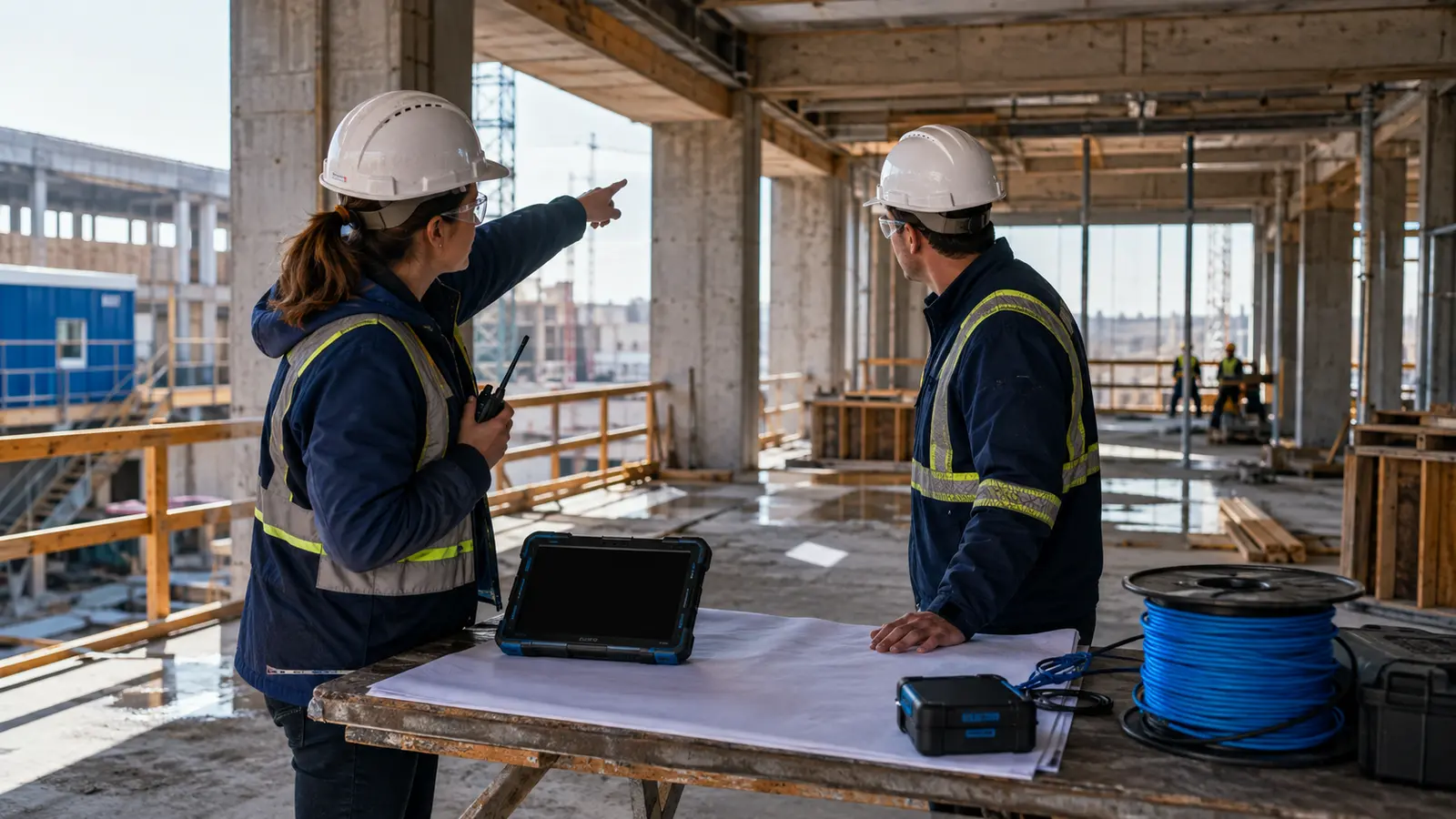
Connectivity is often treated as site setup. In practice, it can affect coordination, documentation, safety processes, scheduling, and the speed of field decisions.
Tie connectivity to the schedule
Identify when the site needs service, what construction conditions exist at that stage, which applications and devices must work, how many users and partners need access, and when the footprint will change. Carrier lead times and site readiness should appear in the project plan.
Temporary and permanent services may overlap. Define how equipment, cabling, power, security, addressing, and support will transition as the site develops.
Design for changing conditions
Usage may shift from a small trailer to multiple structures, field devices, cameras, collaboration, plan access, and visitor or subcontractor needs. Evaluate coverage, capacity, environmental conditions, segmentation, resilience, and practical support access.
- Primary and backup connectivity options
- Critical applications and tolerable interruption
- Who can approve carrier or equipment changes
- Support process for field personnel
- Inventory and demobilization plan
Give one person the dependency map
When carriers, general contractors, electrical teams, technology providers, platform vendors, and project leaders are involved, one coordination view prevents gaps between scopes.
AMD helps construction organizations assess connectivity and technology requirements, source providers and equipment, coordinate implementation, manage vendors, and support multi-location operations.
Talk through your situation
Every environment, contract, team, risk profile, and business priority is different. AMD can help clarify requirements, compare options, coordinate providers, and define a practical next step without forcing a predetermined product.