
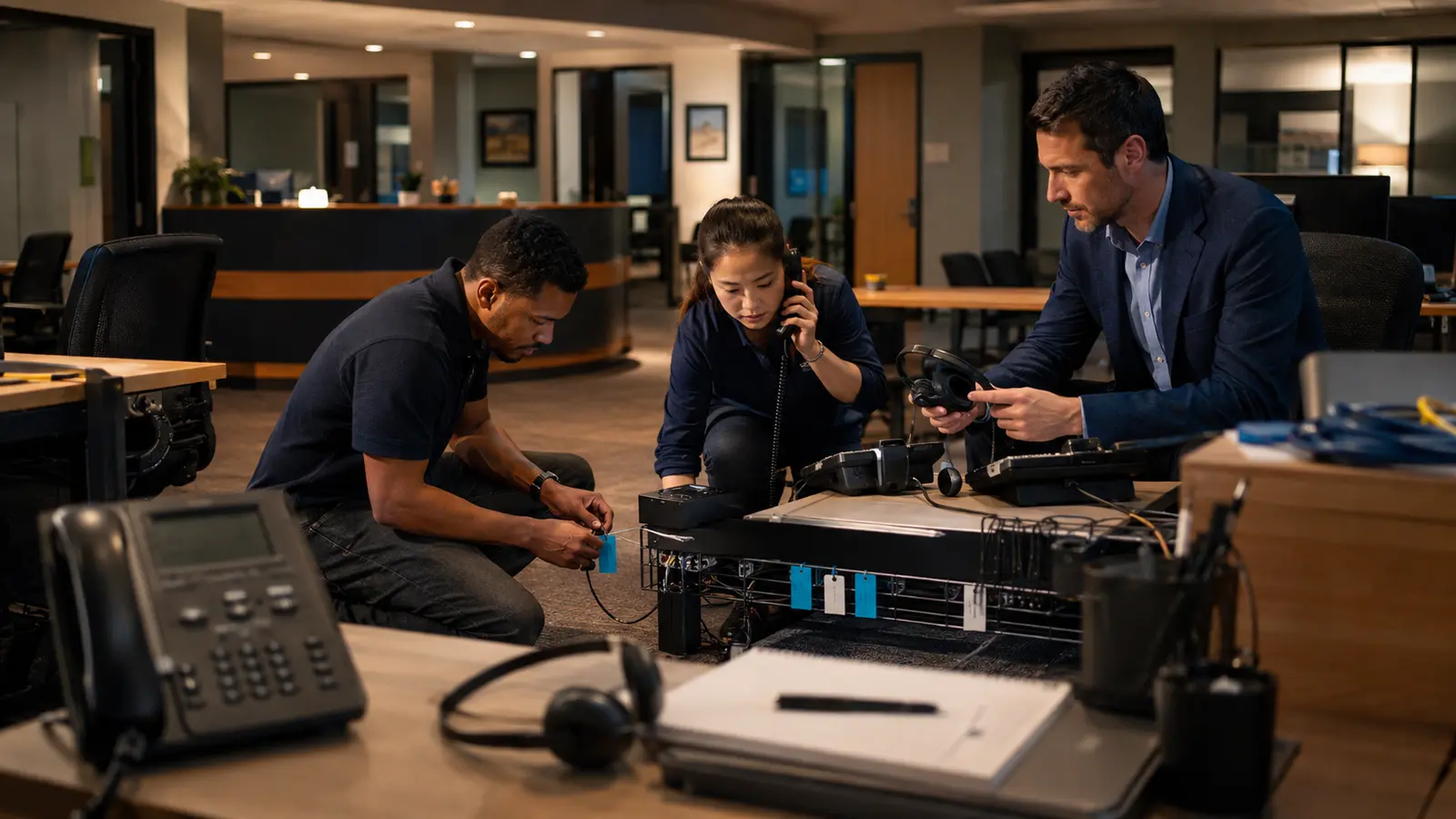
A phone migration is not a device swap. It is a change to customer access, employee habits, emergency information, carrier records, and business continuity.
Inventory the experience, not just the numbers
Record main numbers, direct numbers, toll-free services, fax or specialty lines, emergency-location requirements, call queues, auto attendants, business hours, voicemail, recording needs, integrations, and after-hours routing. Identify who owns each call flow and who can approve a change.
Numbers can appear unused while still supporting an alarm, elevator, payment device, campaign, or customer habit. Validate purpose before porting or disconnecting.
Test the conditions people will use
Confirm network capacity and quality, power, headsets, mobile apps, remote users, shared spaces, contact-center behaviors, and user identity. Test inbound, outbound, transfer, hold, voicemail, emergency configuration, failover, and any regulated or contractual recording behavior that applies.
- Published and customer-facing numbers
- Carrier port status and fallback contacts
- Call paths by location and time of day
- User training for the few tasks that matter most
Keep the old path until evidence is clear
Define cutover acceptance checks and the period during which old services remain available. Assign one command path for issue triage so employees are not opening separate tickets with carriers, platform support, network teams, and device suppliers.
AMD helps assess business communications needs, compare providers, coordinate number porting and implementation, and manage ongoing carrier and platform support.
Talk through your situation
Every environment, contract, team, risk profile, and business priority is different. AMD can help clarify requirements, compare options, coordinate providers, and define a practical next step without forcing a predetermined product.