
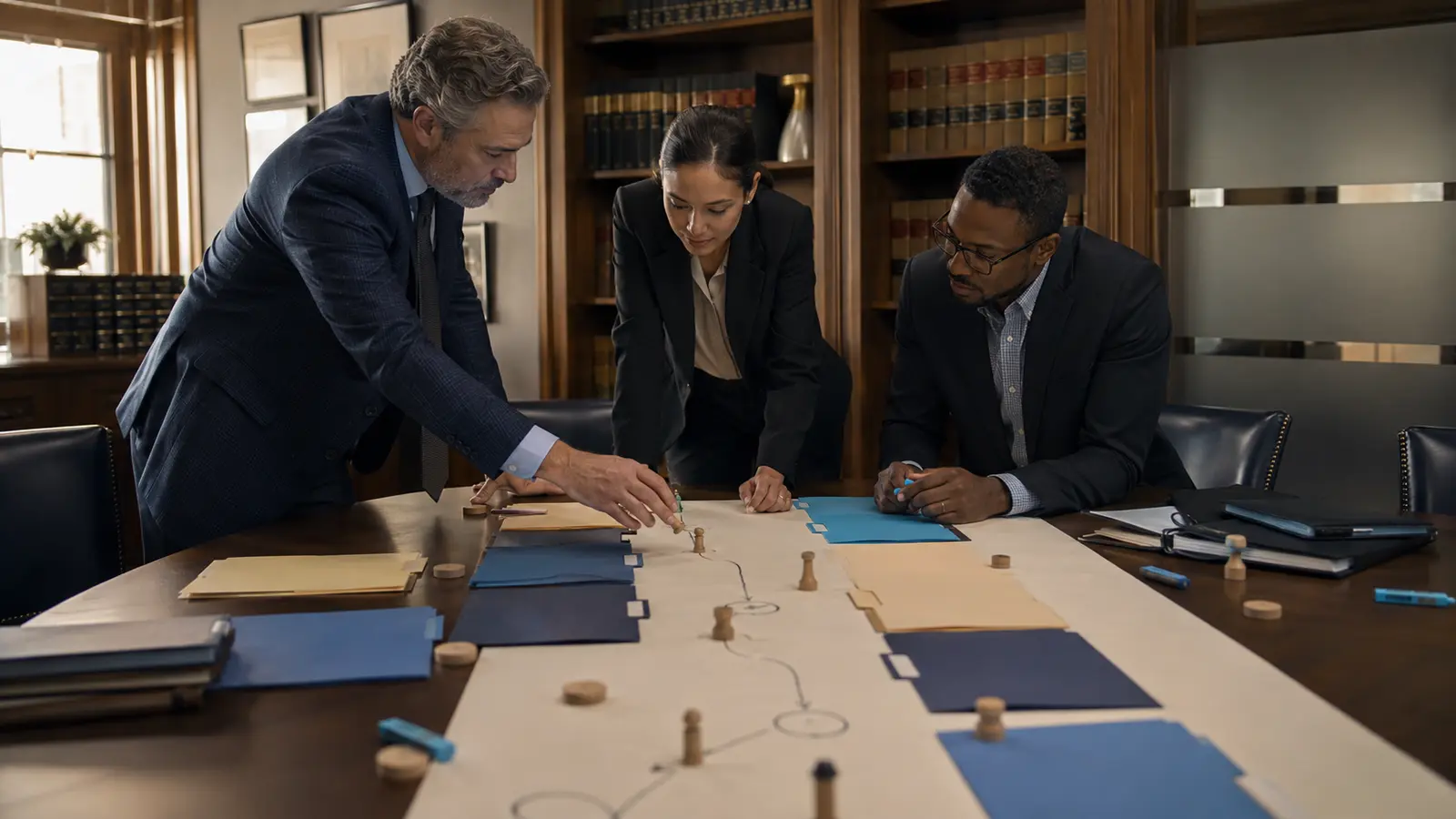
Technology architecture feels abstract. A client matter is concrete: it arrives, gains people and information, moves through decisions, and eventually closes.
Follow the matter
Map intake, conflict checks, engagement, communication, document work, calendaring, collaboration, remote access, billing, retention, and closure. Identify where data is created, copied, shared, approved, and stored at each stage.
The map exposes duplicate entry, unclear authoritative records, fragile handoffs, and access that may persist longer than the work requires.
Ask operating questions
For each technology decision, ask how attorneys, staff, clients, and external parties will use it; who supports it; what happens when it is unavailable; and how access changes as the matter changes.
- Identity and access by role and matter
- Secure, usable client communication paths
- Document ownership and version behavior
- Remote and mobile work conditions
- Provider escalation and recovery priorities
Make professional judgment explicit
Technology can support a firm’s approved security, privacy, records, and client-service practices, but it does not replace legal, ethical, or professional judgment. Requirements should be defined with the firm’s appropriate leaders and counsel.
AMD helps law firms evaluate technology, compare providers, coordinate implementation, manage vendors, procure hardware and software, and support ongoing operations.
Talk through your situation
Every environment, contract, team, risk profile, and business priority is different. AMD can help clarify requirements, compare options, coordinate providers, and define a practical next step without forcing a predetermined product.