
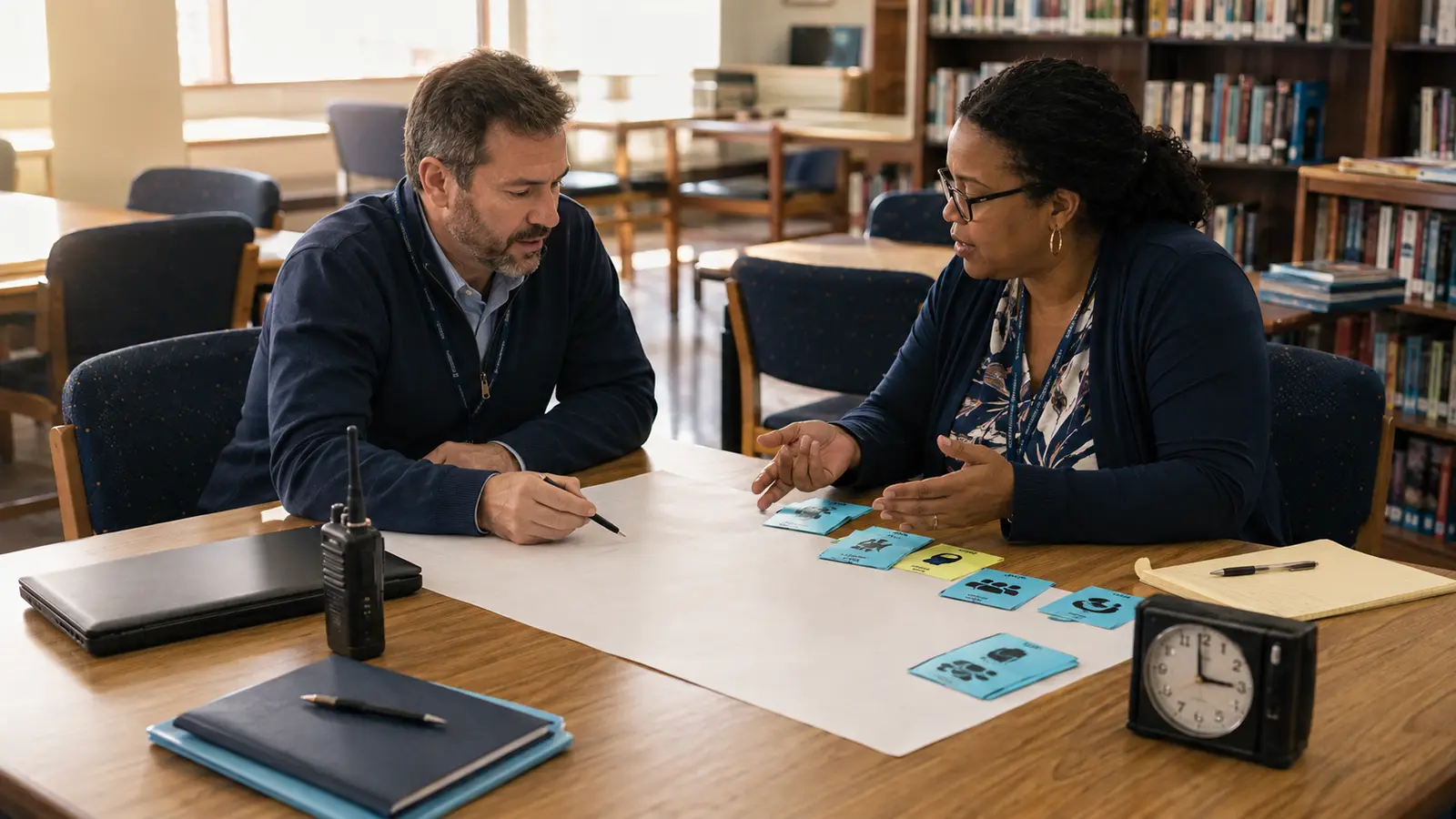
Resilience becomes clearer when the unit of planning is a school activity—not a list of hardware.
Map the day in essential activities
Identify the technology needed for arrival, attendance, instruction, communication, student services, administration, dismissal, facilities, and emergency procedures. For each activity, define the minimum usable service and a practical fallback.
This approach shows why a single identity, network, communications, device, or provider issue can affect several departments differently.
Design support for constrained moments
A teacher starting class, an administrator during dismissal, and a remote support provider have different information and time. Create simple reporting paths, priority rules, and communication methods that work during the busiest periods.
- Current owner for each critical platform
- Access and account recovery procedures
- Provider contacts available outside the affected system
- Device and connectivity alternatives for essential work
- Short exercises that include nontechnical roles
Build a review rhythm
Enrollment, staffing, devices, applications, grant cycles, contracts, and security risks change. Review the service inventory, access, renewal schedule, recovery assumptions, and support ownership at predictable points in the academic calendar.
AMD helps education organizations evaluate, procure, implement, and support cloud, network, communications, security, hardware, software, and professional services. Technology measures support but do not guarantee safety, security, or compliance.
Talk through your situation
Every environment, contract, team, risk profile, and business priority is different. AMD can help clarify requirements, compare options, coordinate providers, and define a practical next step without forcing a predetermined product.